How to Spot Fake or Low-Grade Banswara Purple Marble Before You Buy
How to Spot Fake or Low-Grade Banswara Purple Marble Before You Buy
Here is the thing about buying marble that nobody really warns you about upfront: the photo is almost useless. So is the price. If you are looking at genuine Banswara Purple Marble for flooring, a feature wall, or countertops, the difference between real stone and something that just looks like it in a brochure is significant and it only becomes obvious after you know what to check. Some vendors sell lower-grade material at the same rate as premium stone. It happens often enough that it is worth going in prepared.
Start With the Color and Be Honest About What You See
Genuine purple marble from Banswara does not look uniform. The purple has variation in it, a kind of depth that shifts when the light changes. White or grey veining cuts through it naturally. When a slab looks too even like the color was applied rather than grown that should give you pause. Low-grade stone often comes out brownish or flat, and once it is laid and sealed, that dullness does not go anywhere. Either the color has character or it does not. That part is pretty easy to see if you are actually looking.
The Veining Pattern Cannot Lie But It Can Be Faked
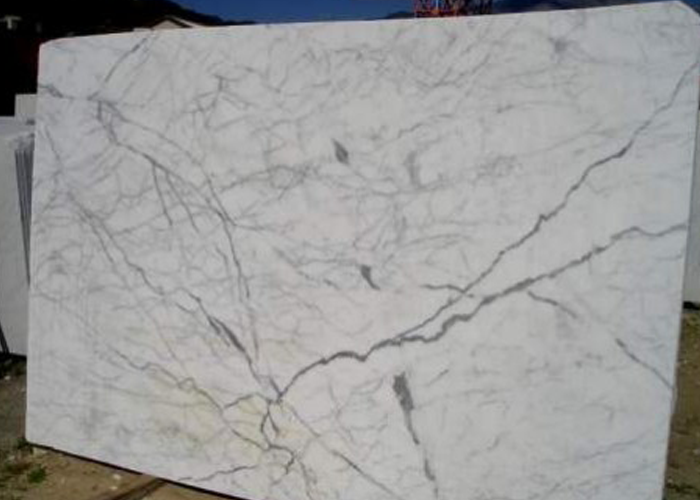
Natural stone veins are irregular. They curve, branch, and vary in thickness because that is what mineral deposits do over time. If you are standing in front of a slab and the pattern seems to repeat, or the veins run in directions that feel too deliberate, stop. You are likely looking at ceramic or engineered stone with a marble-print surface. The simplest check: look at the cut edge of the slab. In real marble, the veining runs through the body of the stone. On a printed or engineered product, the face pattern simply stops.
Run Your Hand Across It Before You Decide Anything
A properly quarried and finished slab feels smooth and dense. No patches, no small craters, no spots where the polish looks dull against the rest. If the surface feels uneven or pitted, that is either poor-quality stone or rough processing either way, not what you want under your feet or on your kitchen counter for the next twenty years. A quick water test helps too. Put a few drops on the surface. Good marble takes its time absorbing water. Cheap stone drinks it up in seconds, which means every spill becomes a potential stain.
Ask About the Source. If the Answer Is Vague, That Tells You Something
Banswara is a real place in Rajasthan with specific quarries producing stone that has consistent characteristics. A supplier who knows their inventory should be able to tell you plainly where the slab came from. Not a region. Not "Rajasthan stock." The quarry, or at least the district. If that question gets deflected or answered with something generic, take note. You are not being difficult by asking, you are just doing what any careful buyer should do.
Why Choose Shree Abhayanand Marbles
Shree Abhayanand Marbles sources directly from Rajasthan quarries, which means the stone gets checked before it ever reaches a customer. The team has worked with this material long enough to give you an honest read on grade, finish, and what actually holds up in different applications. No upselling on what is sitting in stock. If something is not right for your project, you will hear that too.
Know Before You Buy
Bad marble does not always announce itself. Sometimes it looks fine in the yard, gets installed, and only starts showing its problems six months later when the color fades or a stain sets in that will not come out. Checking color depth, veining, surface quality, and supplier transparency takes maybe ten minutes. It is worth every one of them.